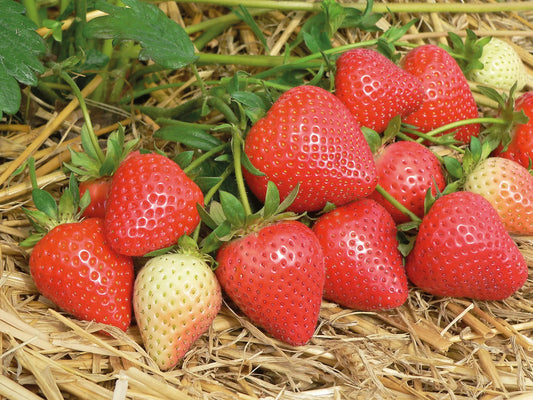
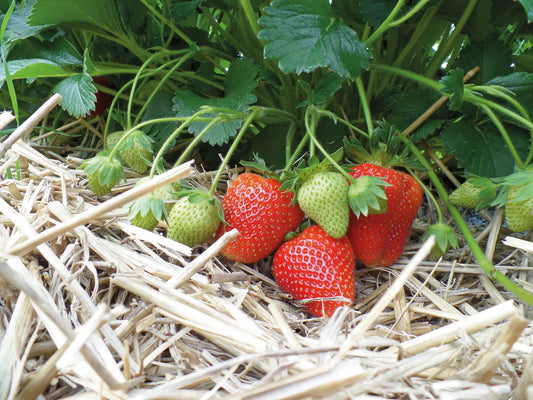
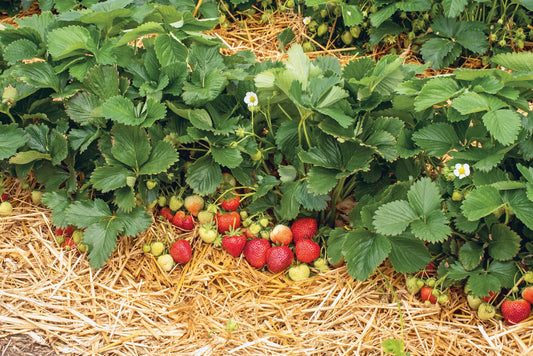
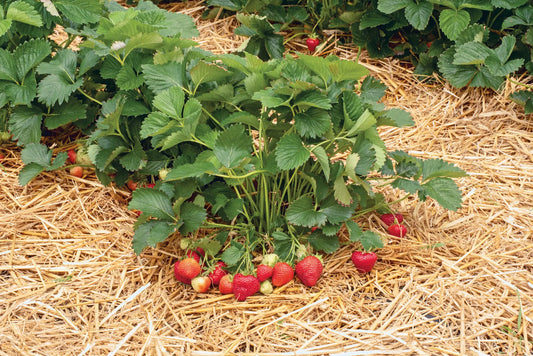
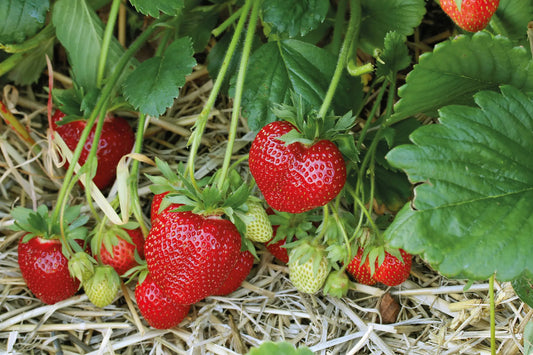
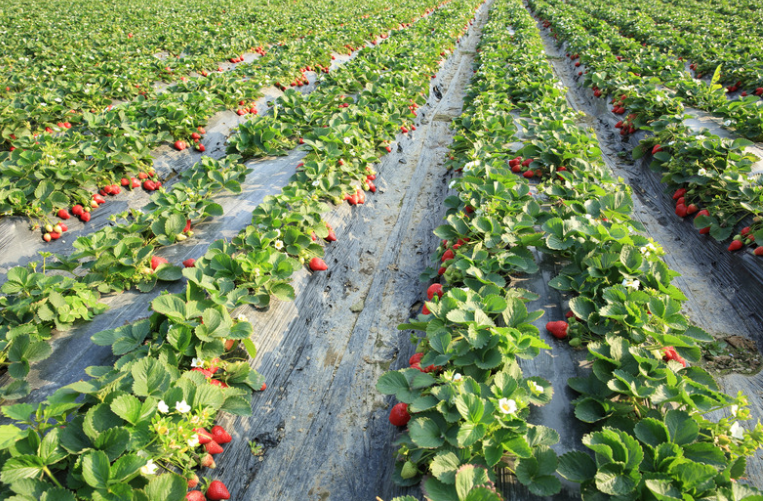
Presentation of our range of organic strawberry cakes
Our wide range of organic strawberries covers all the needs of professional strawberry growers: early, everbearing, or day-neutral varieties; refrigerated plants, waiting beds, in plugs, or in pots; all certified organic and produced by specialized French nurseries. Each batch undergoes rigorous varietal and health control to guarantee consistent recovery, high yield potential, and the sustainability of your strawberry plantation.
Our sales arguments
We ensure a simple and fluid agricultural supply thanks to a responsive sales service that provides responses and quotes within 24 hours , with free quotes and advice based on a complete technical itinerary for strawberry growers . Via our online sales and integrated logistics, your strawberry plants, available all year round, are delivered to your home anywhere in France with careful delivery .
We offer the widest range of strawberry varieties in France , adapted to each production niche. Professional quality strawberry plants, from specialized nurseries , are sold in wholesale strawberry plant sales at producer prices , with decreasing prices according to volume for unbeatable value for money . Our responsive and quality after-sales service , supported by dedicated technical support and personalized technical advice , secures your investment. As a specialist in strawberry cultivation , we guarantee a long-lasting and successful partnership.
Our commitment to organic and fair prices
At Fraisiverse , we believe that high-quality organic strawberries should remain accessible to all strawberry growers looking to expand or diversify. Certified organic, we offer organic strawberry plants at producer prices to support the organic sector and enable everyone to earn a decent living from their work. Our approach is based on:
-
A realistic production cost ensuring the economic sustainability of farms.
-
Professional quality strawberry plants from specialist nurseries , available all year round and delivered directly to your home.
-
Preferential rates promoting the growth of competitive and sustainable French organic strawberry production.
Regulation and certification of organic strawberry plants
Organic farming (AB) is a method of agricultural production governed by strict European regulations, the fundamental principles of which include the prohibition of phytosanitary products and synthetic chemical fertilizers, Genetically Modified Organisms (GMOs), respect for the link to the soil, food autonomy, recycling of organic matter, crop rotation and biological control. A strawberry plant is certified organic if its production complies with the AB specifications , and this includes the mother plant from which it comes.
It is important to note that in organic farming, all plants and seeds should ideally come from AB-certified nurseries . However, exceptions exist in the event of the general unavailability of organic plants for a given variety. In this case, it is possible to use "untreated" plants, i.e. plants that have not undergone any chemical treatment after harvest, even if the mother plant may have been cultivated conventionally. For strawberries intended for human consumption, a special scheme allows the production of organic fruit even if the plant is not certified organic, provided that organic rules are respected from the time of planting. However, for conventional plug plants, an exception is necessary if the cultivation period is longer than three months .
Typology of organic strawberry plants
The choice of plant type directly influences harvest timing, production cycle length, and planting costs. Each type has its own agronomic and economic characteristics, which should be considered to optimize your production schedule and profitability.
Organic fridge plants
Frigo plants are bare-rooted plants harvested in mid-November and deep frozen in a cold room at a temperature of -2°C to 0°C to keep them dormant. This method allows for very strong root development before harvest, ensuring better recovery once planted. They are classified according to the diameter of the rhizome at the root collar, which is an indicator of the number of inflorescences each plant will produce:
-
A++ (over 18 mm) and A+ (over 15 mm) : Ideal for a 60-day crop, allowing an early harvest in the first year after planting.
-
A (10 to 14 mm) : The most commonly planted type due to its attractive price, offering a possible harvest in Year 1, although the yield is lower than the higher sizes.
-
A- (8 to 10 mm) : Perfect for light to medium soils. It is often recommended to remove flower clusters in the first year to promote rooting and boost productivity in Year 2.
-
B (6 to 8 mm) : Mainly intended for repotting in nurseries or garden centers, not recommended for professional market gardening.
Frigo plants are generally planted from March to the end of May , with a typical growing period of three years, with peak yield expected in Year 2. Although inexpensive to purchase, they require a long time between planting and the first significant harvest (approximately one year). Frigo plants can be certified AB if they come from approved nurseries.
Organic plants in clods or pots
A strawberry plant in a ball, or pot, is a runner already rooted in a small block of substrate ( 60 to 90 cm³ ) placed in a 7 to 9 cm plastic pot. These plants are harvested and potted between the beginning and mid-July, then watered constantly until the roots develop sufficiently, allowing delivery from the end of July/beginning of August.
Plug plants offer almost instant recovery thanks to their active root system already integrated into the substrate, minimizing transplant stress. They allow for later planting, from mid-July to early October, which can free up time in the spring. Although they are more expensive than Frigo plants, their ease of recovery and lower maintenance requirements often offset this cost. Production reliability is also greater than with bare-root plants. For beginner strawberry growers, plug plants represent an excellent cost/maintenance balance.
Regarding organic certification, the "classic" root ball from non-organic runners and cultivated over a short period is not certifiable. However, root balls from Frigo AB plants, grown for six to eight weeks in 100% organic conditions , are eligible for certification. The use of conventional root balls in organic cultivation is possible under exemption if planting takes place at least three months before harvest.
Fresh organic bare-root plants
Fresh bare-root plants are runners pulled from the field, without any substrate around the roots, and are shipped and planted immediately after harvest, usually between early and mid-July . They are very economical, offering a reduction in establishment costs of approximately 60% compared to Tray plants.
However, the fragility of their delicate roots requires handling and abundant and frequent watering upon receipt and during the first few weeks to ensure good recovery. These plants must be sufficiently developed in the fall for flower induction, which takes place between late September and early November, a crucial period for determining the following year's yield potential. Harvest generally takes place the year after planting, producing large fruits. Although they require more maintenance, their attractive price makes them a wise choice for experienced strawberry growers wishing to control their costs. Bare-root plants can be certified organic if they come from approved nurseries.
Organic Plants Tray and Mini-Tray
Tray plants are runners transplanted and raised in alveolar trays with a large root ball volume ( 250-300 ml ), while Mini-Trays have a reduced volume (approximately 130 cc). They are produced for intensive cultivation and are highly prized for their ability to offer a high yield from the first year, with harvest possible 60 to 70 days after planting .
These plants are particularly suitable for cultivation in greenhouses or forcing tunnels, as well as in soilless systems on substrate or raised tables, where they benefit from optimal control of growing conditions and reduce stress linked to high temperatures.
Historically, Tray plants were a type of plant authorized in organic farming, but since 2022 , organic certification for classic Tray plants is no longer possible due to cultivation techniques deemed not to comply with organic standards (in particular, intensive fertilization in nurseries). However, professionals can still use "Tray Plants UAB" (Usable in Organic Agriculture) which mostly comply with the standards, or use conventional Tray Plants under exemption, after validation by a certifying body and justification of the absence of organic alternatives. The cost of these plants is significantly higher due to their complex production method and negative cold storage.
Organic Waiting Bed plants
Waiting Bed plants are an economical alternative to Tray plants, offering high yield potential from the year of planting. They are grown from fresh plants or fresh plugs, transplanted and started in the nursery in the open ground, then pulled up in December after the growth has stopped and stored in the refrigerator.
These plants can produce strawberries between 60 and 70 days after planting , like Tray plants, but at a lower cost. This method is particularly suitable for greenhouses and 60-day crops. Drip irrigation is imperative for their rapid growth and yield potential. Waiting Bed plants can be certified AB, provided that the technical recommendations are strictly followed and the plants are ordered before July 31 of the year preceding planting .
Benefits of organic production
Adopting organic strawberry cultivation offers multiple benefits, both environmental and economic, for professional strawberry growers.
Environmental protection and soil health
Organic farming prohibits the use of chemical pesticides and synthetic fertilizers, thus reducing the exposure of crops and the environment to potentially harmful substances. This approach promotes biodiversity and soil health , an essential pillar for sustainable production. Crop rotation, a fundamental practice in organic farming, helps maintain soil fertility and reduce the accumulation of pathogens, improving the resilience of the agricultural ecosystem.
Commercial promotion and customer loyalty
The "Organic Agriculture" label is a quality and origin identification mark (SIQO) that enhances your products and attracts customers concerned about quality and production ethics. Consumers are increasingly willing to pay a premium price for certified organic fruit. This enhancement translates into an improved selling price per kilogram, thus optimizing your profitability and margin. The transparency provided by organic certification strengthens customer confidence and promotes loyalty, creating stable and sustainable business opportunities, particularly through local markets, direct sales, or partnerships with retailers favoring fresh, local products.
Cultivation of organic strawberries
Rigorous management adapted to the principles of organic farming is essential to ensure the vitality of plants and abundant harvests.
Soil preparation and characteristics
Strawberry is a demanding plant in terms of soil quality. It thrives best in loamy soils , providing good aeration and efficient drainage, while retaining moisture and nutrients. A slightly acidic pH, between 5.8 and 6.2 , is crucial to maximize the absorption of essential nutrients (nitrogen, phosphorus, potassium). It is imperative to avoid soils that are too clayey, heavy, cold, loamy, compacted, asphyxiating or calcareous, as well as excess salinity.
Before planting, a soil analysis is recommended to determine specific needs. Incorporating organic matter, such as mature compost or well-rotted manure ( 30 to 50 tonnes per hectare ), is essential to improve soil fertility and structure. Subsoiling may be necessary for poorly draining soils, and the formation of raised mounds (20 cm high) is recommended to promote soil warming, prevent root asphyxiation and facilitate harvesting by avoiding direct contact of the fruit with the soil.
Crop rotation is a crucial preventive measure in organic farming to avoid the accumulation of soil-borne pathogens. It is recommended not to establish a strawberry field less than 6 to 7 years after the previous one , or even 15 to 20 years in the event of a history of diseases such as Phytophthora. Permanent meadows, cereals or green manures are favorable precedents, while solanaceae (tomatoes, potatoes) should be avoided due to the risks of Verticillium and Rhizoctonia.
Irrigation and fertilization
Water is a limiting factor for strawberry growth and production. Strawberry plants require approximately 2.5 to 4 cm of water per week , increasing to 5 cm during periods of extreme heat or drought. Regular watering is essential, especially during the active growth and fruiting phase, but not excessively to avoid stagnant water, which encourages fungal diseases. Drip irrigation is the preferred method , as it allows for efficient and controlled water distribution, limiting moisture on the foliage and reducing the risk of disease. Watering early in the day is recommended to allow plants to dry before nightfall.
When it comes to fertilization, the organic approach favors organic amendments such as compost and manure, which improve soil structure and ensure a slow and steady release of nutrients. An initial application of a balanced fertilizer (such as 10-10-10) can be beneficial at planting, followed by an application rich in phosphorus and potassium after flowering to support fruit development. Regular soil tests are crucial for detecting deficiencies and adjusting applications. In organic farming, fertigation with bio-soluble fertilizers can be used for a regular supply of nutrients.
Phytosanitary protection in organic farming
Phytosanitary protection in organic farming is mainly based on prophylactic measures and integrated biological control (IBP) , limiting the use of phytosanitary products as much as possible.
Essential prophylactic measures
-
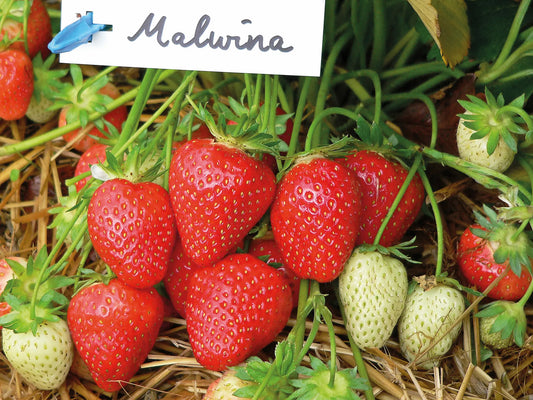
Choose a resistant variety : Choosing varieties that are naturally resistant to common diseases and pests is the first line of defense. For example, 'Rumba' and 'Malwina' are known for their resistance to botrytis and powdery mildew, and 'Malwina' to verticillium.
-
Rigorous cultural hygiene : Immediately remove infected fruit, plant debris, and old leaves to limit the spread of fungal spores and pest populations. Disinfecting gardening tools is also essential.
-
Moisture and ventilation management : Ensure adequate spacing between plants (30 to 45 cm between plants, 90 to 120 cm between rows) for good air circulation. Avoiding overhead irrigation and soggy soils drastically reduces the risk of gray mold (Botrytis), powdery mildew, and Phytophthora.
-
Mulching : Using mulch (plastic or organic) helps control weeds, retain soil moisture, and prevent direct contact of fruit with the soil, thus limiting rot.
-
Regular monitoring : Careful and frequent observation of plots allows the first signs of disease or pests to be detected and rapid intervention to be made before a massive spread.
Integrated biological control
PBI uses living organisms to control pest populations. It is very effective in organic farming.
-
Natural predators : Ladybugs are predators of aphids and can be introduced into crops. Other beneficials such as lacewings, hoverflies, and Orius are also valuable in regulating aphid and thrip populations.
-
Beneficial nematodes : These microscopic worms parasitize and kill the larvae of soil pests such as root weevils (Otiorhynchus sulcatus, Common cockchafer). They are applied to the soil around plants.
-
Trichogramma : These small wasps parasitize the eggs of insect pests, preventing them from hatching.
-
Natural oils : Neem and canola oils act as repellents and insecticides, suffocating pests (aphids, spider mites) or disrupting their development. Potassium soap can also be used against thrips.
-
Drosophila suzukii management : Specific strategies are needed to combat this fly, which lays eggs in healthy fruit. These include the use of insect netting, trapping with vinegar traps, and, above all, strict hygiene at the production site, including frequent harvesting and systematic disposal of rotten or unsold fruit in airtight containers.
Varietal selection and production scheduling
Choosing the right strawberry variety is a cornerstone of successful organic strawberry farming. It must be tailored to the local climate, disease resistance, and production and marketing objectives.
Variety selection criteria
-
Disease resistance : Choose varieties that are naturally resistant to diseases endemic to your region, such as Verticillium wilt, fruit rot (Botrytis), or powdery mildew. This reduces your reliance on treatments.
-
Climate tolerance : Choose varieties suited to the specific climatic conditions of your site, including late frosts, heavy rains, or periods of drought. For example, 'Rumba' tolerates late frosts well thanks to its protective foliage.
-
Harvest period : To spread production and meet market demand throughout the season, it is recommended to grow a mix of varieties with different earliness.
-
Production Objective : For the fresh market, favor varieties with good shelf life and attractive appearance, such as 'Malwina' or 'Faith'. For processing, intense flavor and suitable texture are essential.
Production staging strategy
Staggered production involves spreading harvest periods throughout the season using different varieties. This approach helps maintain continuous production, optimize yields and sales, and generate consistent income over an extended period.
Here are examples of varieties recommended for staggered production:
-
Early production (May-June) : 'Allegro', 'Rumba', 'Clery', 'Dahli', 'Favette', 'Gariguette', 'Dély'.
-
Average production (June-July) : 'Verdi', 'Sonsation', 'Magnum', 'Belrubi', 'Faith', 'Falco', 'Korona', 'Sonata', 'Rubis des Jardins', 'Séraphine'.
-
Late production (July-October) : 'Malwina', 'Florence', 'Magnus', 'Salsa'.
For the everbearing varieties that produce over a very long period (June to October or November), 'Mara des Bois', 'Charlotte', 'Murano', 'Florentina', 'Favori', 'Hademar', 'San Andreas', 'Ostara', 'Rabunda', 'Reine des Vallées', 'Cantaliss' are good choices for a gradual harvest.
Economic and commercial aspects
Success in organic strawberry farming is not limited to good growing practices; it also incorporates rigorous economic planning and an effective business strategy.
Costs and financing
Starting a strawberry plantation involves initial costs (plants, soil preparation, irrigation system, protective structures) and recurring costs (maintenance, fertilization, pest/disease control, labor). Plant costs range from €0.15 to €0.70 per plant , with organic certifications potentially more expensive.
Strawberry growers can benefit from various financial aids, including aid from the Common Agricultural Policy (CAP) , regional and local subsidies, loans and grants from Bpifrance, and European funding such as the LEADER program. These schemes are crucial to support the investments necessary for quality organic production.
Yields and marketing
Yields vary considerably depending on the variety and growing conditions. For example, 'Gariguette' and 'Clery' can reach 30 tonnes per hectare , while 'Mara des Bois' and 'Sonata' are around 18 tonnes per hectare. A good yield for a plantation is around 25 tonnes per hectare, with Frigo plants yielding an average of 500-600 g/plant.
Marketing can be done through several channels:
-
Local markets and direct sales : Allow direct contact with consumers and better product promotion, often associated with higher prices per kilogram.
-
Distribution to local retailers : Partnerships with local grocery stores, restaurants and bakeries, enhanced by organic certifications.
-
Online sales : Using platforms and social networks to expand the audience and offer subscriptions or direct deliveries.
-
Transformation into derivative products : Jams, coulis, syrups or frozen fruits allow you to use unsold products and extend their shelf life.
By integrating these economic and commercial aspects from the planning stage, strawberry growers can maximize their profits while contributing positively to the environment.
To summarize: Our Organic Strawberry Plants
Fraisiverse is aimed at professionals in the sector with a complete range of Organic Strawberry Plants , rigorously certified and produced in France. As a specialist wholesale supplier of Strawberry Plants , we guarantee a reliable supply, total traceability and tailor-made technical support. Our range covers all professional types: fridge plants, plugs, trays, mini-trays and waiting beds, all available in organic certification or UAB exemption depending on the case. These plants ensure rapid recovery , excellent production consistency and high yield potential . Whether you want to buy Organic Strawberry Plants for spring, summer or 60-day greenhouse cultivation, Fraisiverse supports you with proven expertise and a responsive sales service . Our producer prices and decreasing rates allow you to reconcile economic performance and compliance with organic specifications. Choosing Fraisiverse means choosing a specialist wholesale supplier of Strawberry Plants committed to sustainable agriculture. To buy organic strawberry plants in the best conditions, benefit from our personalized advice , our integrated logistics and reliable after-sales service . Trust a wholesale supplier specializing in strawberry plants to buy organic strawberry plants at the right time, at the right price, and with the right technical support.